Concept Renders
What smart waste infrastructure could look like.
These renders explore how Recycla's technology might integrate into real campus environments at scale.
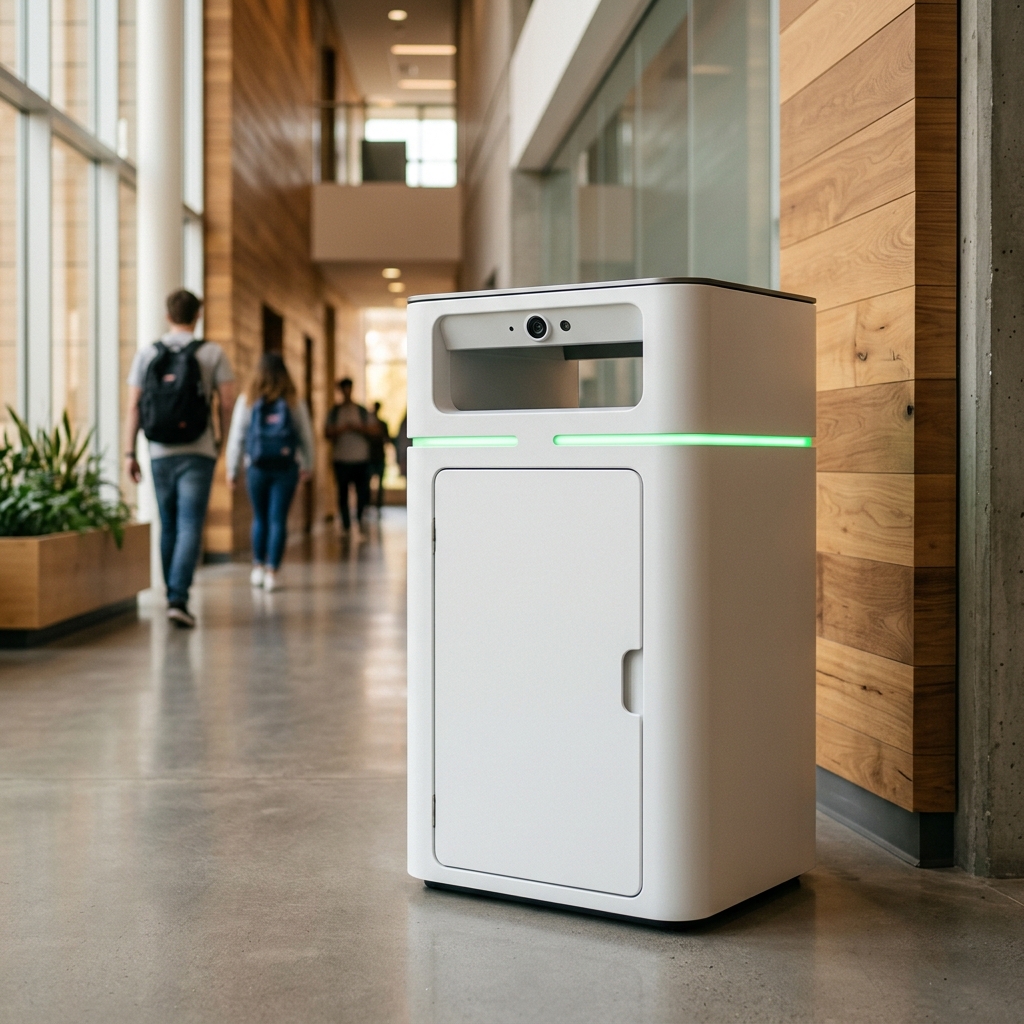
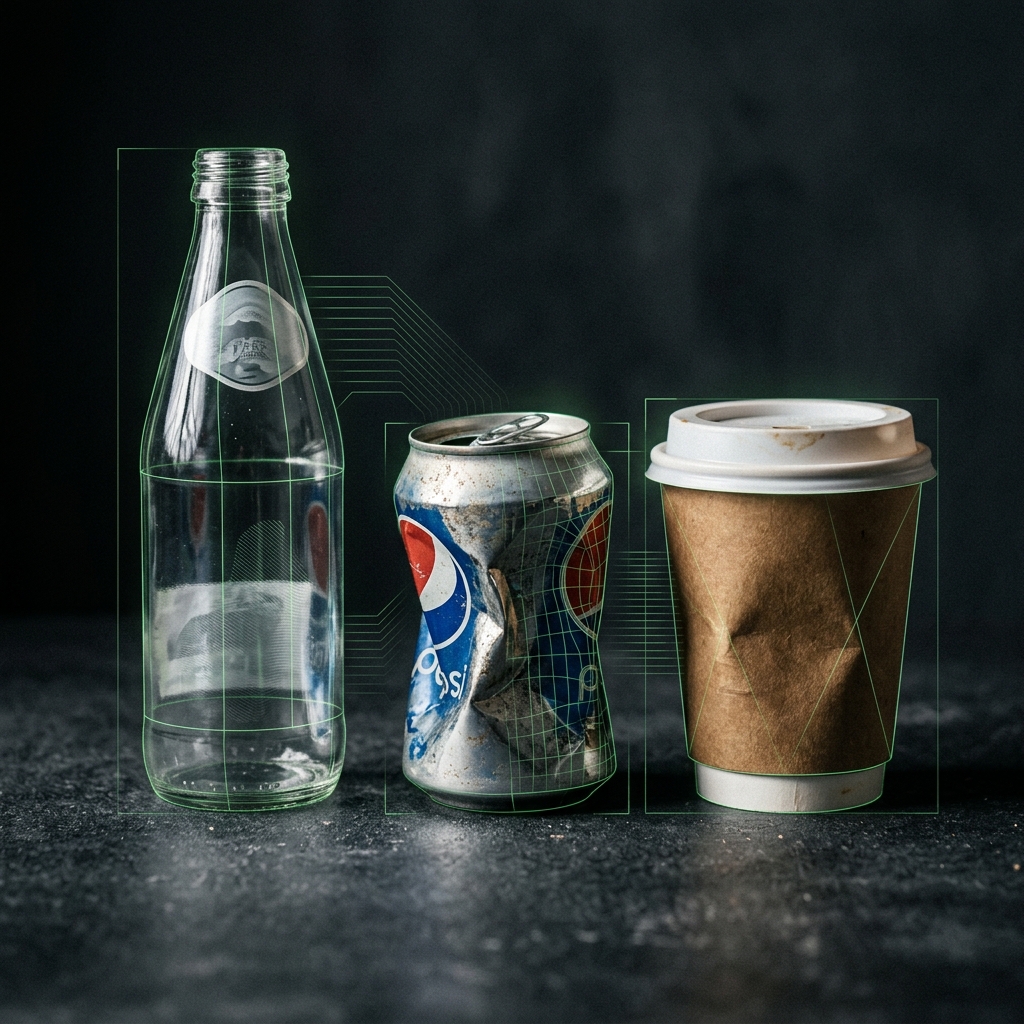

Recycla started as a capstone project. But the problem it solves — contaminated recycling, wasted resources, and confused sorting — exists at every university, office, and public space. Here is what the future could look like.
These renders explore how Recycla's technology might integrate into real campus environments at scale.
A single Recycla unit handles one waste stream. But the real impact comes from deployment at scale. Imagine every recycling station on campus equipped with a smart bin — each one feeding classification data back to a central dashboard.
Facilities managers could see real-time contamination rates by building. The model could be retrained on campus-specific waste patterns. New categories — compost, e-waste, hazardous materials — could be added without changing hardware.
The system is designed to be modular, affordable, and maintainable. A Raspberry Pi 4, a camera, two servos, and an ultrasonic sensor. The total bill of materials is under $80. That makes campus-wide deployment not just possible, but practical.
Expand from two compartments (recycling / garbage) to four: recycling, compost, garbage, and e-waste. Each requiring only one additional servo per stream.
Real-time monitoring of classification accuracy, contamination rates, and waste volumes by location. Data that facilities teams can actually use.
On-device feedback loop where misclassified items are flagged and automatically added to the training dataset for the next model update.
Networked bins communicating via Wi-Fi, sharing classification models and waste data across a unified campus waste management system.